FINDING YOUR VOICE - PREP FOR DEBATE 2
TIME - 3.45pm Monday 5th October 2020
LOCATION - Zoom link Debate1 FYV
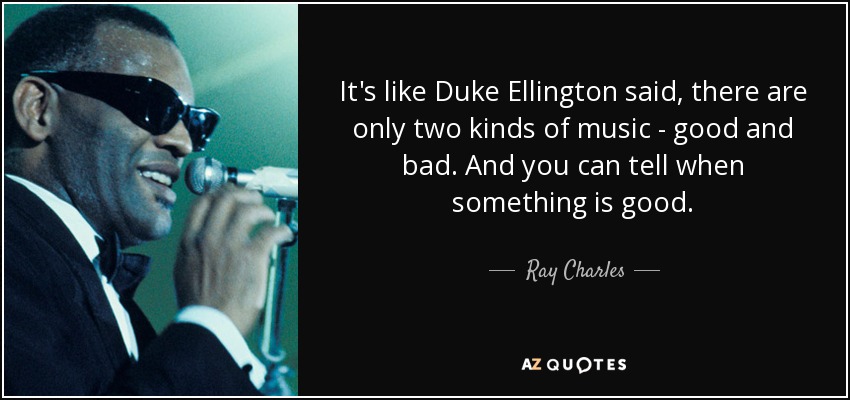
Debate Title: THERE IS NO SUCH THING AS 'GOOD' AND 'BAD' MUSIC - ONLY PEOPLE'S OPINIONS.
Chair: Neil Kulkarni
Panel: For - Claudia Bolland, Tristan Tearo, Owen Binns
Against - Jessica Brett, Daniel Summers, Rohan Kalra
Debate summary -
We often hear people saying that certain music is 'good' or 'bad' - what do they MEAN by that? Can music be objectively BAD or objectively GOOD or are such judgements always a matter of personal opinion?
For - music is art and therefore subjective, how else can we explain why we like different music over the course of our lives UNLESS music is a subjective experience, if music was objectively bad or good why would people prefer 'bad' music, terms like 'good music' and 'bad music' are usually used to exert snobbery about certain types of music and artists ('real music' fans and old farts moaning about modern pop mainly)
Against - without a conception of 'good' and 'bad' music how do we critically evaluate music - wouldn't it mean music criticism is dead and everyone should just make their own mind up - how do we know what good music is if we don't know what bad music is to compare it to, if music is designed for dancing and doesn't make you dance surely it has failed and is 'bad' music?
I posted this debate topic on Facebook and got some interesting responses . . .
"The tricky thing with the proposition is that it's very hard / impossible / pointless to argue that an apple is better than an orange, BUT you can have two records which are trying to do precisely the same thing musically, one of which is clearly better than the other.So I'd say the answer is "Well, there's certainly such a thing as music that's objectively better or worse than other music - but it's only possible to make that comparison in certain circumstances, and there's rarely much point in actually doing it, because even when you can demonstrate some kind of objective superiority, who cares anyway?" - Taylor Parkes, music critic
"There are some apples that nobody can eat, mushy and tasteless, but they exist to help us appreciate the qualities of those apples we prefer" - David Toop, composer, authour
"I realise I'm dancing on the head of a pin here, but even when it's really obvious that pretty much everyone would say A is better than B, that doesn't mean you've achieved objectivity in the A/B analysis at hand. I mean, "objective" has a fairly unambiguous meaning.Perhaps "better / worse" is where we head into murky waters. A hammer is terrible for frying an egg with, but floating free of a stated purpose, it is neither inherently worse or better than a frying pan as a thing in itself.(Tangentially, this is why it always annoyed me when people would criticise particularly bracing bits of psych or techno as "music that only sounds good if you're on drugs". There's nothing wrong with music having an intended and / or ideal context to be experienced in.)For music, it's even more muddled than the hammer / frying pan thing. Because music doesn't have a *product* or *outcome* and there's really no way of measuring whether it succeeded at delivering some other thing. And kicking that further back up the process, music can still be sublime even when executed really shoddily. And conversely can still be god-awful when done to a staggering level of skill.Myself, I don't think claims of objectivity have much place in the consideration of music, or indeed almost any art. Really, it's that kind of thinking that (potentially) leads one to making proper tunes on real instruments, and you know, screw that" - John Tatlock, producer & DJ
"I think holding that music can be objectively good or bad is a ‘necessary fiction’ - impossible to prove philosophically, but without that belief, how is it possible for artists to improve or critics make judgements? And if you can have an objectively badly made table (ie it has one leg shorter than the other), you can apply the same strictures to music? Interesting!" - John Mullen, TV producer
"The objectively badly made table may be eagerly sought after by enthusiasts of lop-sidedness, and indeed may constitute an objectively well-made table in a colony consisting entirely of such people!" - Klaus Morlock, producer
"The second q is a minefield. Unless you are talking about pp who can't sing or play, how can you answer that? Objectively, who can say whether Status Quo or Joy Division is good or bad? And since popular doesn't mean good, what are your criteria? And tastes change, so Abba were considered naff by many in their day but now their skill and artistry are admired. Will be an interesting discussion..." - Rachael West, pal!
"Rachael Cross it's not as easily defined as singing or playing abilities though. I've seen people who can sing and play to a high standard, whose music is rubbish, and I've seen people who aren't particularly good singers or musicians whose music is great." - Ian Kinsella, another pal!
"the real difference between good and bad is more about authenticity in some ways. Whether it's done from the heart or whether it's basically a sell-out for money" - Rhys Needham, pal.
WHAT TO GET READY FOR MONDAY
You can either do these as a blogpost on your Finding Your Voice blog (call the post Debate Prep 1) or simply as a word-doc - so long as you can access it during the debate + email it to me afterwards that's fine.
1. A 100 word (minimum) personal statement of your position on the debate topic.
2. A bullet-pointed list of the main points you're going to make - this will be similar to your personal statement but will be easier to use during discussion - add as many/little notes to each bullet point as you wish.
2. A short bibliography of any links that you used.
3. AFTER the debate add a subheading 'Reflection' and simply say in a few lines who YOU think 'won' the debate, and how you might improve your preparation for the next debate.


Comments
Post a Comment